I spent my first year of golf trying to figure everything out on my own.
I watched YouTube videos at midnight. I read blog posts about grip and stance. I practiced at the range by myself, trying to remember what that one instructor said in that one clinic six weeks ago.
And you know what happened? I improved... very slowly. Painfully slowly. And I almost quit multiple times because I felt like I was doing it wrong but had no one to ask.
Then I found my first golf mentor - not a formal coach, just a woman in my league who'd been playing for many years and was willing to answer my endless questions. She'd show me how to move my ball marker if it was in the line of another player. She helped me figure out the best snacks to pack and the best shops to find golf outfits.
Simple things. Some things a beginner wouldn't know to even ask about.
My progress accelerated dramatically. Not because I suddenly had natural talent, but because I finally had support in my golf journey.
And here's what I've learned over the past four years watching hundreds of women learn golf: the women who stick with golf and actually improve aren't the ones with the most natural ability. They're the ones who found the right support at the right time.
Today I want to talk about what real support looks like in golf, the different forms it can take, and why trying to do this completely alone is the hardest possible path.
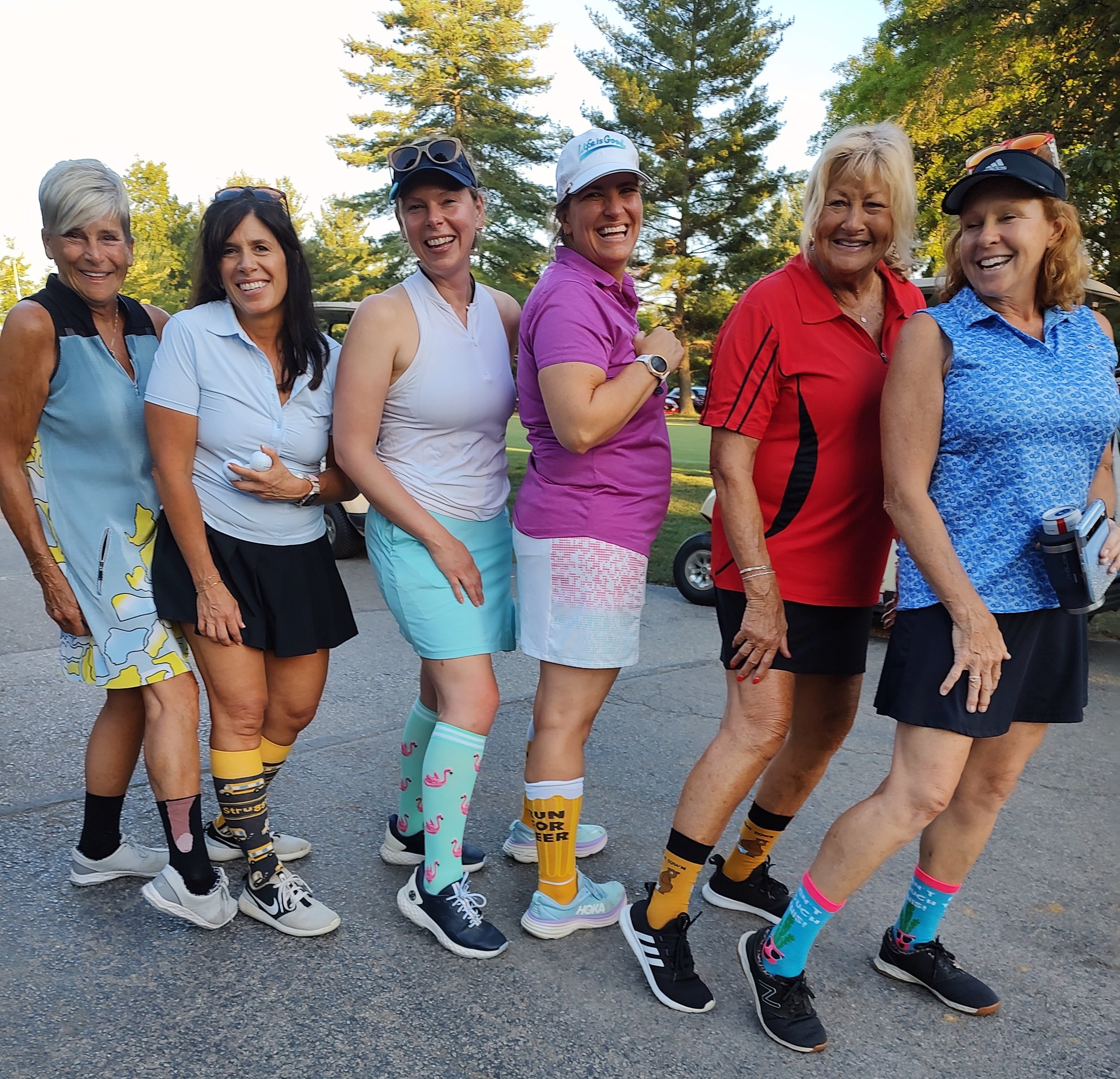
Why Golf Is Particularly Hard to Learn Alone
Let me start by acknowledging something: golf is uniquely difficult to self-teach.
Unlike running or swimming or even tennis, where you can see immediate cause-and-effect between what you do and what happens, golf has this maddening delay.
You change your grip. Does it help? You won't know until you've hit 100 balls with the new grip. And even then, you might be changing the wrong thing.
You work on your backswing. But maybe your real problem is your setup. Or your weight shift. Or the fact that you're aiming 20 degrees left of your target.
Without outside perspective, you can practice the wrong thing for months and wonder why you're not improving.
Add to that the psychological component - the anxiety about embarrassing yourself, the imposter syndrome, the fear of asking "stupid questions" - and you have a sport that's incredibly hard to navigate solo.
This doesn't mean you're weak or incapable. It means golf is complex and having support accelerates your progress exponentially.
The Myth of "Figuring It Out Yourself"
There's this weird cultural narrative in golf that you should be able to figure things out on your own. That asking for help is somehow admitting defeat.
This is nonsense.

Every accomplished golfer - and I mean every single one - had help along the way. Coaches, mentors, playing partners who offered advice, instructional books or videos, structured programs.
Nobody woke up one day naturally knowing how to play golf.
The difference between the people who progress quickly and the people who struggle for years? The successful ones found support early and weren't ashamed to use it.
Different Forms of Golf Support (And Which One You Might Need)
Support doesn't look the same for everyone. Here are the different forms it can take:
1. A Golf Mentor: The Informal Guide
This is someone who's a few steps ahead of you on the golf journey and willing to share what they've learned.
What they provide:
Answers to questions you're embarrassed to ask others
Real-time feedback during casual rounds
Encouragement when you're frustrated
Perspective from someone who remembers being where you are
How to find one:
Join a golf league and connect with more experienced players
Ask someone whose game you admire if you can play together sometime
Attend golf events and introduce yourself to people
Be open about being a beginner - people love helping
My golf mentor never formally agreed to be my mentor. I just started asking her questions, and she started offering advice.
The relationship is informal, organic, and incredibly valuable.
2. Private Instruction: The Professional Investment
A PGA or LPGA certified instructor who works with you one-on-one.
What they provide:
Technical expertise on swing mechanics
Video analysis and data from launch monitors
Customized drills for YOUR specific issues
Accountability and structure
When you need this:
You're serious about improvement and have specific goals
You've hit a plateau and can't figure out what's wrong
You're preparing for something important (tournament, business outing, golf trip)
You have the budget and want accelerated progress
The limitation: Lessons are periodic - typically weekly or every other week. Between lessons, you're on your own to remember and practice what you learned.

3. Group Clinics: The Community Classroom
Learning alongside other golfers with an instructor leading.
What they provide:
Affordable instruction (much cheaper than private lessons)
Community of people at your same level
Exposure to common beginner mistakes (and how to fix them)
Built-in practice partners and potential golf friends
When you need this:
You're brand new and need foundational knowledge
You want to meet other golfers
Budget is a constraint
You learn well in group settings
The limitation: Less individualized attention than private lessons. The pace is set by the group, not customized to you. These clinics don’t usually take you ON the golf course - they are just teaching you in the driving range bays or on the putting green. So you don’t get the immediate feedback on the golf course finding that rhythm of play, whether your golf partners prefer pin in or out, watching a friend make a sweet bump & run shot and thinking how you’ll try that next time.
4. Books and Online Resources: The Self-Directed Path
Golf instruction books, YouTube channels, blogs, podcasts.
What they provide:
Flexibility to learn on your own schedule
Exposure to different teaching philosophies
Cost-effective way to learn fundamentals
Ability to revisit concepts as needed
When you need this:
You're supplementing other instruction
You want to understand the "why" behind techniques
You prefer to research and learn independently
You're on a tight budget
The limitation: No personalized feedback. You might be practicing something incorrectly and not know it. Easy to get overwhelmed by conflicting advice.
My take on this: Books and videos are fantastic SUPPLEMENTS to instruction, but they shouldn't be your only source. Use them to reinforce what you're learning from a coach or mentor.
5. Structured Online Programs: The Comprehensive System
Complete golf education programs delivered digitally with progressive lessons.
What they provide:
Step-by-step curriculum that builds on itself
All the foundational knowledge in one place
Ability to learn at your own pace
Usually includes video, written content, checklists, and downloadable resources
More comprehensive than random YouTube videos, more affordable than ongoing private lessons
When you need this:
You want structured learning but need flexibility
You're tired of piecing together information from scattered sources
You want a complete foundation before investing in private lessons
You learn well from organized, progressive curriculum
The limitation: Like books and videos, there's no live feedback on your swing. Best used in combination with some form of live instruction or mentor relationship.
Why this matters: A good structured program gives you the comprehensive foundation that takes months to piece together on your own. It's like having a course curriculum instead of random lectures.
The Isolation Trap: What Happens When You Go It Alone

I want to be direct about what typically happens when golfers try to do this completely solo:
Month 1-2: Excitement and initial progress
Month 3-4: Confusion and frustration as progress slows
Month 5-6: Self-doubt and wondering if you're "doing it wrong"
Month 6-12: Either giving up entirely or finally seeking help
The women who try to figure out golf alone usually fall into one of these patterns:
The YouTube Rabbit Hole: Watching hundreds of videos from different instructors with conflicting advice, getting more confused instead of more knowledgeable.
The Range Hermit: Practicing alone for hours, reinforcing bad habits because there's no feedback loop.
The Nervous Avoider: Too intimidated to play with others, missing out on the social learning that happens during actual rounds.
The Quitter: Giving up after 6-12 months because progress is so slow and lonely that it stops being fun.
None of these people lack talent or dedication. They just lack support.
What Changes When You Have the Right Support
Let me tell you what happened when I finally stopped trying to do everything alone:
I stopped wasting time on the wrong things. My mentor told me "You don't need to work on your driver right now. Focus on your short game." Boom - my scores dropped because I was actually working on what mattered.
I had someone to celebrate wins with. When I finally broke 50 for nine holes, I had people who genuinely understood what an accomplishment that was.
I had accountability. Knowing I had league on Monday nights meant I actually practiced on weekends instead of just thinking about practicing.
I stopped feeling like an imposter. Being part of a community of women learning together normalized the struggle. I wasn't uniquely bad - I was appropriately new.
I had answers to my questions. Instead of Googling "should I use a tee with an iron shot on a short par 3" at 11 PM (yes, I did this), I could just ask Sarah the next time we played.
The progress wasn't just faster - it was sustainable. I didn't quit because I had people who kept me engaged and encouraged.
How to Know What Type of Support You Need Right Now
Not sure where to start? Ask yourself these questions:
"What's my biggest struggle right now?"
Technical (my swing, my putting): → Private lessons or clinics
Knowledge (I don't know what I don't know): → Structured program or mentor
Confidence (I'm afraid to play with others): → Structured program or mentor
Motivation (I can't make myself practice): → League for accountability
"How do I learn best?"
Hands-on with immediate feedback: → Private lessons or clinics
Structured, progressive curriculum: → Online program or book
Social learning from peers: → League or group clinics
Combination of all three: → Use multiple forms of support
"What's my realistic budget?"
Under $100: Books, online resources, find a mentor
$100-500: Group clinics, online programs
$500-1000: Mix of clinics and private lessons
$1000+: Regular private instruction
"What's my timeline?"
Need help NOW for upcoming event: → Private lessons
Building foundation a several weeks or months: → Structured program + mentor
Long-term improvement over years: → Combination of league, lessons, and resources
The Support You Don't Even Know You Need
Here's something I didn't realize until I had it: emotional support matters as much as technical support in golf.
You need people who:
Understand why you're frustrated when you three-putt from 6 feet
Celebrate when you finally hit your driver straight
Remind you that golf is supposed to be fun when you're taking it too seriously
Tell you to keep going when you want to quit
This emotional support often comes from the same places as technical support - leagues, mentors, golf friends.
But it's a separate and equally important form of support that makes the hard days bearable and the good days worth celebrating.
What I Wish Someone Had Told Me
If I could go back and talk to myself when I was brand new to golf, here's what I'd say:
"You don't have to figure this out alone. In fact, trying to figure it out alone is making everything harder than it needs to be.
Find a league. Find a mentor. Get some structured instruction - whether that's clinics, lessons, or a comprehensive program.
You'll progress faster, enjoy it more, and actually stick with it long enough to get good.
And stop being embarrassed to ask for help. Every single woman who's good at golf had help along the way. That's not weakness - that's smart."
Your Next Step
Think about your current golf support system. Do you have:
Regular playing partners or community?
Access to structured instruction or curriculum?
Someone who gives you personalized feedback?
If you're missing one or more of these, this week is the week to change that.
Join the league you've been thinking about.
Reach out to that woman whose game you admire.
Sign up for that clinic you've been considering.
Invest in that program you've been eyeing.
Whatever form of support you need most - go get it.
Because here's what I know for absolute certain after four years of watching women learn golf:
The women who have support enjoy the journey more, improve faster, and actually stick with golf long enough to get really good at it.
Don't try to be the exception who figures it all out alone. Be the smart woman who gets the support she needs and accelerates past everyone who's struggling solo.
You deserve support. You deserve guidance. You deserve to actually enjoy this process instead of constantly feeling confused and behind.
The right support is out there. You just have to reach out and grab it.
Download my free Beginner Golf Guide & Checklist to get started with the fundamentals.