The Complete Guide to Finding Your Perfect Golf League
If I told you that joining a golf league is the secret to transforming your spring golf season from "occasionally playing when the weather's nice" to "actually making real progress…” I might practically hear some of you thinking: "Okay Mary, that sounds great in theory, but I have NO idea how to find a golf league, what kind of league I should join, or whether I'm even ready for league play."
Fair enough. Let's fix that.
Here's what most people don't realize about golf leagues: they're not all the same. At all.
The difference between a competitive 18-hole league with USGA handicaps and a casual "sip & swing" league with instruction is like the difference between a CrossFit competition and a yoga class. Both involve physical activity, both can help you improve, but they're completely different experiences.
So today, I'm walking you through every type of golf league that exists, how to figure out which one matches your skill level and lifestyle, and exactly where to find leagues in your area.
By the end of this post, you'll know exactly what to look for - and you'll be ready to actually sign up instead of spending another season thinking "maybe next year."
Why Golf Leagues Are Different (And Better) Than Just Playing With Friends

Before we dive into league types, let me explain why leagues work when casual golf plans often don't.
Leagues have built-in accountability. When you're "planning to play with friends sometime," it's easy to cancel when you're tired or the weather's iffy or work gets busy. When you're in a league, you have a commitment. Your golf partner is counting on you. The other league teams are counting on you. You show up.
Leagues create consistency. Playing the same course every week means you learn that course intimately. You know which holes play tough, where the tricky pin placements are, how the greens break. This allows you to focus on improving your skills instead of spending mental energy managing a new course every time.
Leagues accelerate learning. You're playing with different people each week who have different skill levels and different approaches to the game. You pick up tips organically. You see how more experienced players handle situations. You learn from watching.
Leagues build community. The women you meet in your league become your golf friends. They're the ones you'll text when you want to play outside of league. They're the ones who'll convince you to sign up for that weekend tournament. They're your people.
And here's the thing most beginners don't realize: you don't have to be good to join a league. You just have to be ready to commit to showing up.
Now let's find you the right one.
The League Landscape: Understanding Your Options
Golf leagues come in all shapes and sizes. Here's your comprehensive breakdown:
9-Hole Par 3 Beginner Leagues
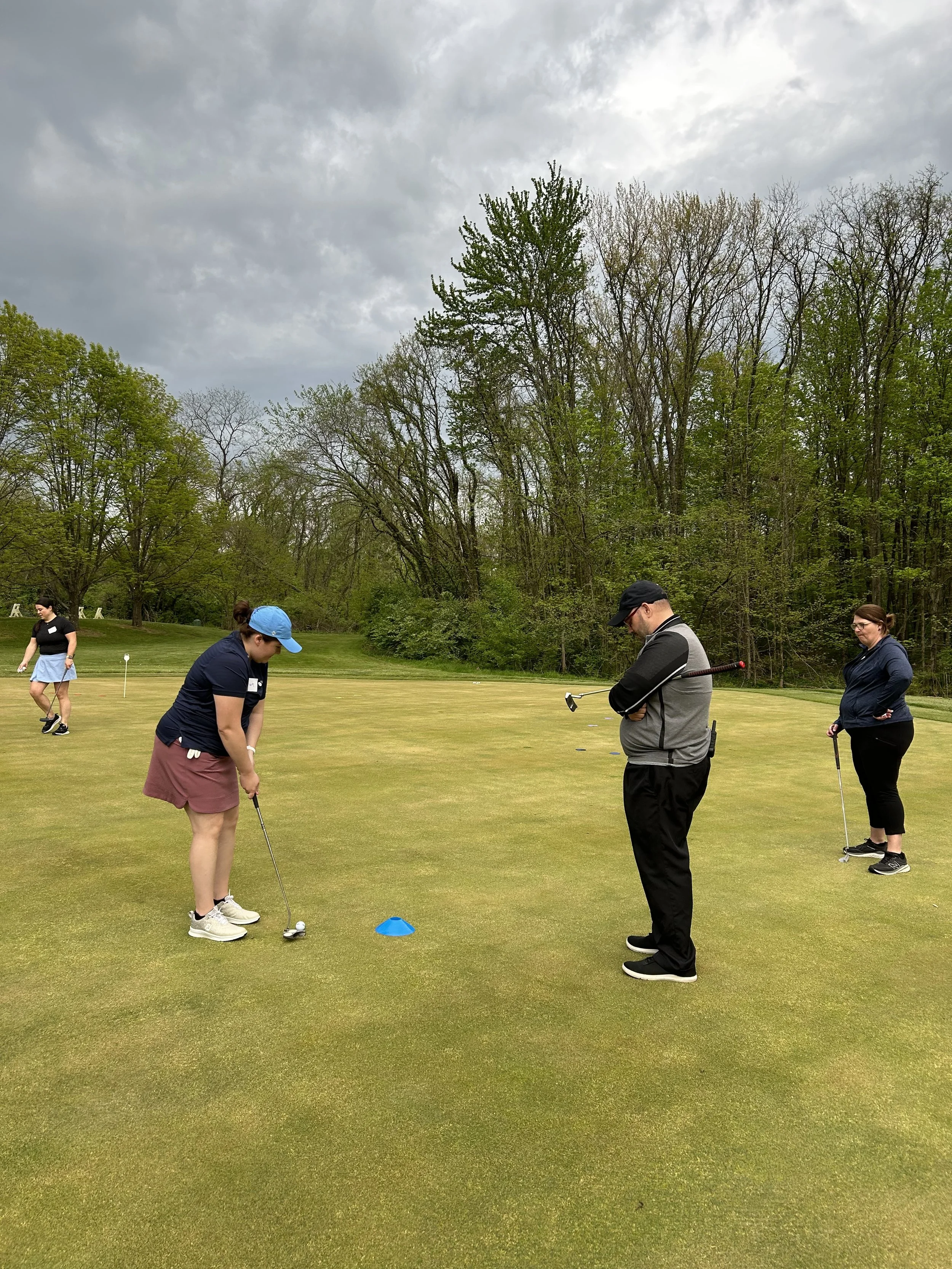
What they are: Leagues that play on shorter, easier courses where every hole is a par 3. These courses are designed for beginners and typically range from 1,500 to 2,500 yards total. Usually, you can see the pin from every tee box - which can be very comforting.
Time commitment: Usually 2-3 hours including warm-up and post-round socializing
Skill level: Perfect for absolute beginners to early intermediate players
Why you'd choose this:
You're brand new to golf and don't feel ready for a full-length course
You want to build confidence on a less intimidating layout
You're working on your short game and iron play
You want a lower-pressure environment to learn league play
What to know: Par 3 courses are designed to be forgiving. You may not be hitting driver off most tees - you're likely hitting irons or hybrids to greens that are visible from the tee box. This removes a lot of the intimidation factor.
The downside? You won't get experience with longer holes or practice with your woods and driver as much. But if you're truly a beginner, that's actually a benefit - you're focusing on the fundamentals without overwhelming yourself.
9-Hole Evening Leagues (Regulation Length Courses)
What they are: Leagues that play 9 holes on a regulation-length course, typically starting between 5-7 PM on weeknight evenings
Time commitment: 2.5-3.5 hours including warm-up
Skill level: Beginner to advanced (varies by league)
Why you'd choose this:
You work full-time and can't play during the day
You want to play on a real course but don't have 5 hours for 18 holes
You prefer the social aspect of evening golf
You enjoy hanging out with golf friends in the clubhouse or on the patio after the round
What to know: Evening 9-hole leagues are probably the most popular format for working women. You can leave work at 4:30, get to the course by 5:15, warm up, and tee off at 6:00. You're done by 8:30-9:00 and still have time to grab dinner or get home to your family.
The pace tends to be faster than 18-hole leagues because everyone's trying to finish before dark (especially early in the season). This can be good if you prefer to keep moving, but it can also feel rushed if you're a slower player.
Later tee times like 6PM might mean a shorter season - perhaps only 8 or 10 weeks due to the sunset. If you are able to participate in a league with 4:30 or 5PM tee times, then you may get 16 to 18 weeks of league play in one season. Typically league coordinators will have teams rotate early and late tee times so that it’s fair to everyone.
Pro tip: If you're considering a 9-hole evening league, check the start times for the first few weeks of the season. In April and early May, a 6:00 PM tee time means you might be finishing the last few holes in twilight. Some leagues adjust start times as the season progresses.
18-Hole Daytime Leagues
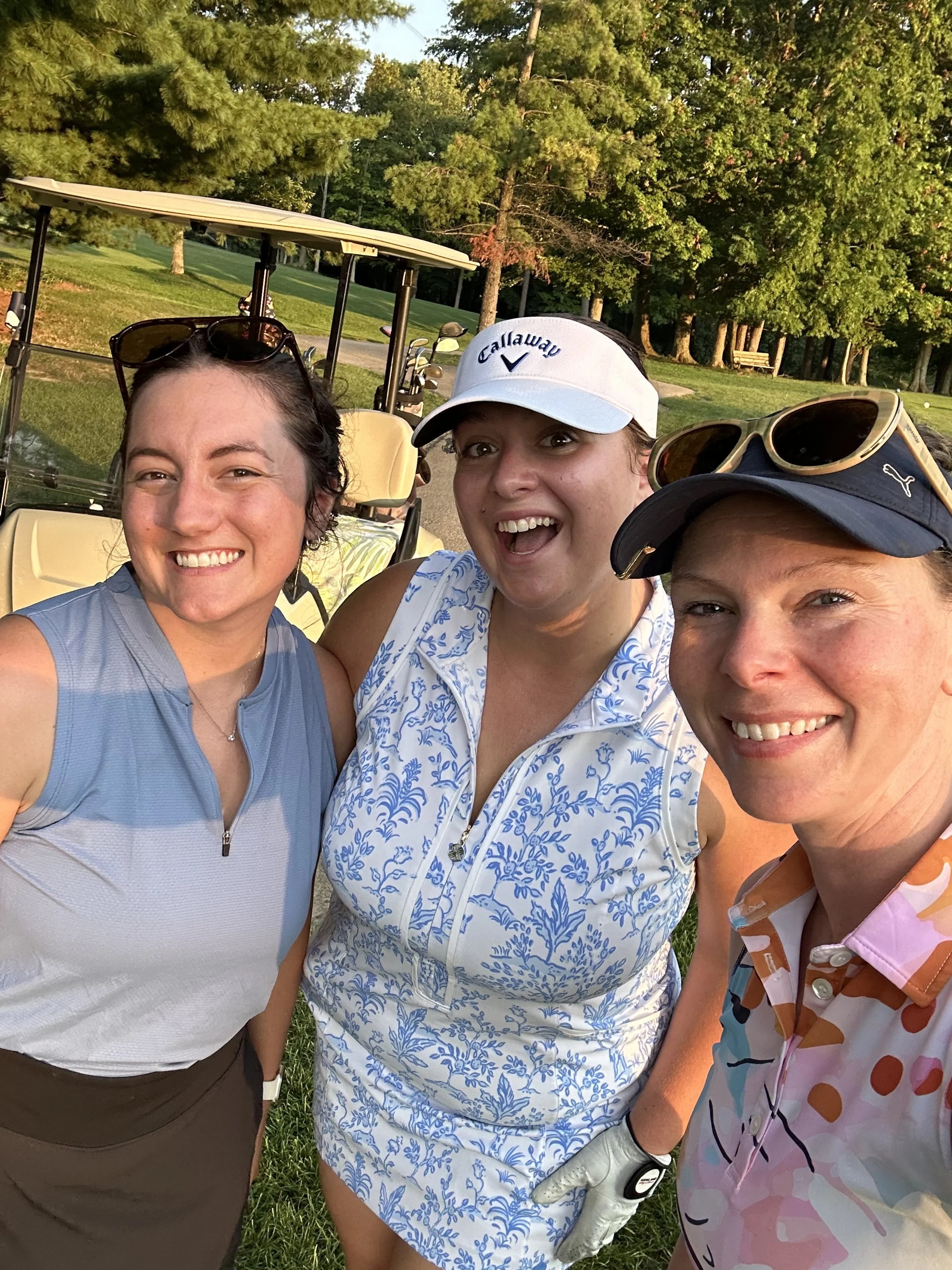
What they are: Leagues that play a full 18 holes, typically starting between 7 or 8 AM and 1 PM on weekdays
Time commitment: 4.5-5.5 hours including warm-up and lunch/socializing after
Skill level: Typically intermediate to advanced, though some beginner-friendly options exist
Why you'd choose this:
You have flexibility in your schedule (retired, work from home, flexible hours)
You want the full golf course experience
You prefer the slower, more leisurely pace of daytime golf
You enjoy the social aspect of post-round lunch with your league
What to know: Day leagues often have a different culture than evening leagues. They tend to be more social, with many leagues incorporating lunch or drinks afterward. The demographic also tends to skew older - lots of retirees and women with grown children.
If you're newer to golf, a day league might be a bit overwhelming. It can get hot on the golf course in the full sun and it can be exhausting to be out on the course for so many hours.
The challenge here is daytime leagues require daytime availability, which most working professionals don't have during the week.
Travel Leagues
What they are: Leagues that play at different golf courses each week, rotating around the city or region
Time commitment: Varies, but usually 18 holes so 4.5-5.5 hours all in, and maybe extra for travel time
Skill level: Usually intermediate to advanced
Why you'd choose this:
You want variety and don't want to play the same course every week
You enjoy exploring different courses
You're comfortable playing unfamiliar layouts
You like the adventure of new challenges each week
What to know: Travel leagues are SO fun, but they require more mental energy than stay-put leagues.
Each week you're managing a new course: different driving directions, different check-in procedures, different layouts, different greens speeds. It's exciting, but it's also exhausting if you're still building confidence.
I recommend travel leagues for people who:
Have been playing for at least 1-2 seasons
Are comfortable with course management and reading new layouts
Don't get overwhelmed by unfamiliar settings
If you're a true beginner, save travel leagues for your second or third season. Master one course first, then explore.
"Sip & Swing" or Instruction-Based Leagues
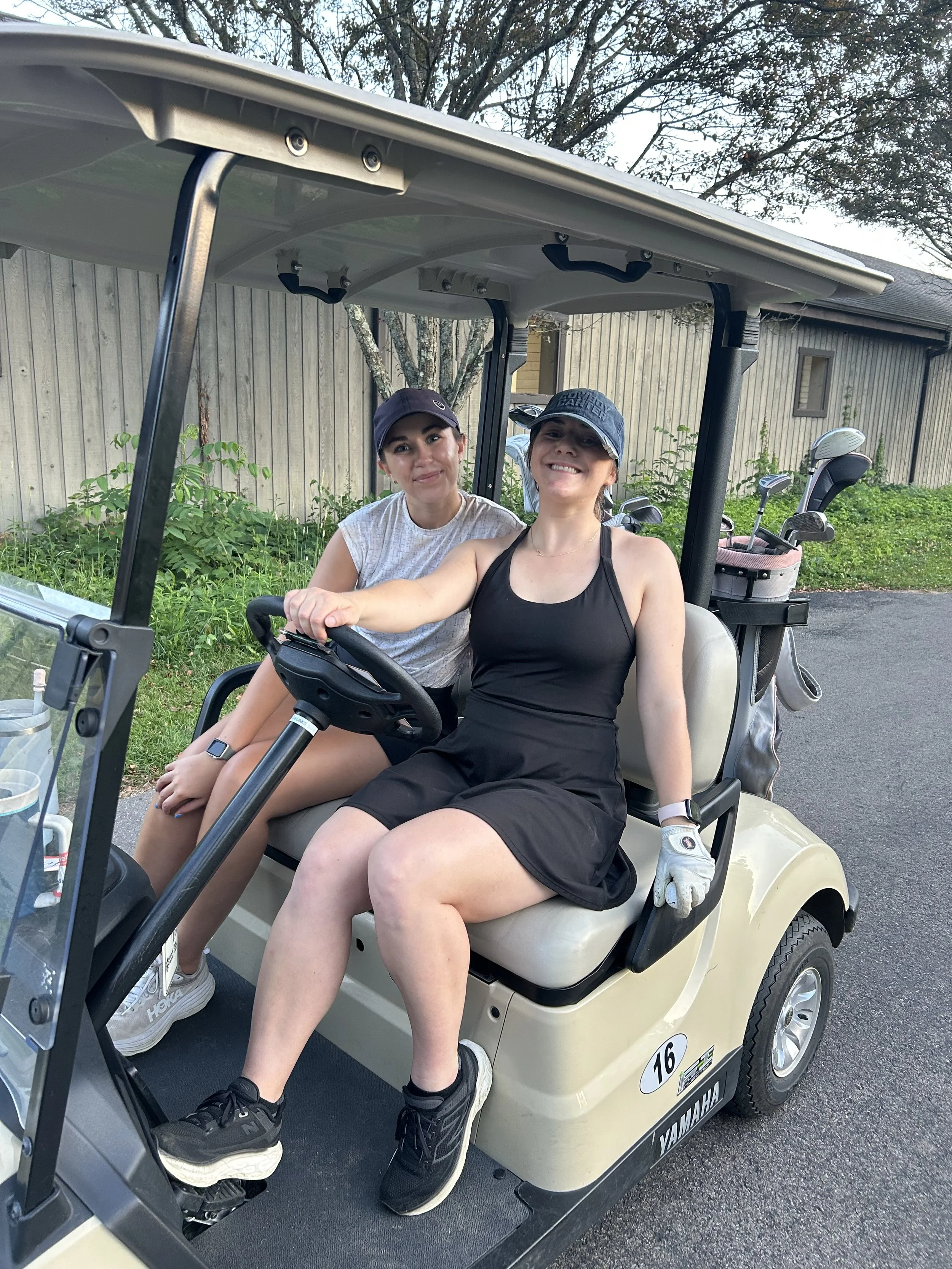
What they are: Leagues that combine golf instruction or clinics with on-course play, often playing 4-6 holes instead of full 9
Time commitment: Usually 2-3 hours
Skill level: Beginner to intermediate
Why you'd choose this:
You want to learn while you play
You're still working on fundamentals
You prefer a more educational, less competitive environment
You enjoy the social/wine aspect after play
What to know: These leagues are genius for beginners because they remove the intimidation factor while building skills.
A typical format might be:
30 minutes of instruction on a specific skill (putting, chipping, driver, etc.)
1.5 hours of playing 4-6 holes where you apply what you learned
30 minutes of socializing afterward (often with wine or drinks, hence "sip & swing")
You're learning, playing, and building community all in one evening. The emphasis is on improvement and fun, not on competitive scoring.
The downside? You're not getting full 9-hole experience, so if your goal is to play complete rounds, this might feel too instructional. But for many beginners, this is the perfect bridge between lessons and actual league play.
Every-Other-Week Leagues
What they are: Leagues that meet every other week instead of weekly
Time commitment: Same as regular leagues, just less frequently
Skill level: All levels
Why you'd choose this:
You can't commit to weekly play due to schedule constraints
You travel frequently for work
You have other regular commitments (kids' activities, etc.)
You want to be in a league but need more flexibility
What to know: These leagues are perfect for busy professionals who want the structure and community of league play without the every-single-week commitment.
The trade-off? You make progress more slowly because you're playing half as often. You also might feel less connected to your league-mates since you're seeing them less frequently.
But if the choice is between an every-other-week league and no league at all, the every-other-week league wins every time.
Leagues that require USGA Handicaps
What they are: Any league whether 9 or 18 holes, day or evening, that requires members to have an official USGA handicap index and use it for scoring and competitions. Not scary I promise! But it is something to know about and ask about when you are considering leagues.
Skill level: All levels, but you must post your score to the USGA GHIN app (handicap system), or alternatively the golf course or your league coordinator may do that for you
Why you'd choose this:
You already have a handicap or are ready to get one
You enjoy competitive play
You want to track your progress officially
You're working toward tournament play
What to know: A USGA handicap is a numerical measure of your scoring ability. It allows players of different skill levels to compete fairly against each other. If you have a handicap of 25 and I have a handicap of 35, you'll get 10 fewer strokes than me when we play on the golf course together. The intent is that a very skilled player can still compete in a meaningful way with someone less skilled. It’s a really important pillar of golf and I encourage you to keep a handicap right away so that you can see where you are and you can watch your improvement over time.
To join a competitive league with handicaps, you typically need to:
Have at least three 18-hole round scores posted or six 9-hole rounds posted (some leagues require more)
Pay for a GHIN number (around $35-50/year)
Commit to posting all your scores throughout the season
These leagues could be more serious. People care about their scores. There may be prize money or trophies involved. If you're brand new and just want to have fun and learn, this might not be your first league choice.
Another important thing to note is that even if your league doesn’t require an official USGA handicap, they may use another system to “handicap” players based on their demonstrated league scores. Even if there are no prizes or trophies at the end, you may still see this handicap component when you log in to see your overall league standings.
In my opinion - go for the league that leverages the handicap! Of course you need to sign up for a USGA handicap - you’re a golfer! This will only help you. Some players think they are “not good enough yet” to sign up for one - but that’s the total opposite of how to think about it. I’ll get off my soap box because that’s a post for another day - but trust me, get yourself a handicap.

The Team of Three Strategy: Your Flexibility Hack
Here's a league strategy that not enough people know about: forming a team of three players who rotate (instead of a team of 2 people who play each week together).
Here's how it works:
You and two friends sign up for a league team that has 2 spots on it. Each week, only two of you play - you rotate who sits out.
Example:
Week 1: Sarah and Michelle play, Jenny sits out
Week 2: Sarah and Jenny play, Michelle sits out
Week 3: Michelle and Jenny play, Sarah sits out
Week 4: Repeat
Why this is brilliant:
You get all the benefits of league play (accountability, community, consistent schedule) with built-in flexibility. Someone has a work conflict? No problem, it's her week to sit out anyway. Someone's traveling? Covered.
As long as two of your three team members can make most weeks, your team stays consistent and nobody feels guilty about missing.
What to know: Not all leagues allow this format, so you'll need to ask when you register. But some leagues are happy to accommodate team-of-three arrangements because it actually helps with attendance consistency.
This is perfect for groups of friends who want to play together but can't all commit to every single week.
How to Choose: Your Decision Framework
Okay, so now you know all the options exist. But which one is right for YOU?
Ask yourself these questions:
Question 1: What's your realistic availability?
Be honest. Not "I could probably make it work if I rearranged things," but "This is genuinely available in my schedule every single week."
Weekday daytime: → 18-hole day league
Weekday evening (can commit weekly): → 9-hole evening league
Weekday evening (can't commit weekly): → Every-other-week league or team-of-three
Variable schedule: → Team-of-three arrangement or every-other-week
Question 2: What's your current skill level?
Be realistic here too. It's better to start in a beginner league and move up than to join an advanced league and feel overwhelmed.
Never played 9 holes on a course: → Par 3 league or sip & swing
Played a few times, still learning: → Beginner 9-hole league
Can complete 9 holes and keep pace: → Regular 9-hole league
Have a handicap and play regularly: → Competitive league with USGA handicaps
Been playing 2+ seasons comfortably: → Consider travel league
Question 3: What's your primary goal?
Learn and improve: → Sip & swing or beginner league with instruction
Meet other golfers: → Any league, but especially social evening leagues
Play competitively: → USGA handicap league
Get comfortable on a course: → Stay-put league (same course weekly)
Challenge myself with variety: → Travel league
Question 4: What's your learning style?
I learn by doing: → Regular league play
I need instruction: → Sip & swing format
I like to watch others: → Any league with mixed skill levels
I prefer structure: → League with defined divisions/flights
Question 5: What's your personality?
Competitive: → Handicap league or competitive division
Social butterfly: → Sip & swing or social evening league
Serious about improvement: → League with strong coordinator who educates
Nervous about judgment: → Beginner-only league or sip & swing
What Makes a GREAT League (Beyond the Format)
Here's something crucial that doesn't get talked about enough: the golf course and the league coordinator drive the culture of the league more than any other factor.
Two leagues with the exact same format (9-hole evening, for example) can feel completely different based on these two elements.
The Course Matters
A league at a well-maintained municipal course with friendly staff creates a different vibe than a league at a private club or a run-down course with surly employees.
Things to consider:
Is the course in good condition?
Is the staff welcoming to beginners?
Are the practice facilities decent (range, putting green)?
Is the clubhouse comfortable for pre/post-round gatherings?
Is the course challenging enough to be interesting but not so hard it's demoralizing?
The Coordinator Matters Even More
A great league coordinator:
Communicates clearly about schedule, rules, and expectations
Creates a welcoming environment for all skill levels
Handles issues fairly and promptly
Provides education (etiquette tips, rule clarifications)
Celebrates wins and milestones
Makes everyone feel valued
A poor league coordinator can ruin even the best format. If communication is unclear, if cliques form and new members feel excluded, if there's drama that doesn't get addressed - the league experience suffers.
How to evaluate before joining:
Ask if you can play as a sub for some league evenings before committing
Talk to current members (ask around in local golf Facebook groups)
Email the coordinator with questions and see how responsive they are
Check if there's a league Facebook page or group to gauge the community vibe
Where to Actually Find Leagues Near You
Alright, you know what you want. Now how do you find it?
Start with your local public courses
Call or visit the pro shop and ask: "Do you have any women's golf leagues? What formats and days?"
Most public courses have at least one women's league. Many have multiple options (day league, evening league, beginner league).
Check your Parks & Recreation Department
Many city rec departments run affordable golf leagues through their municipal courses. These are often very beginner-friendly and budget-conscious.
Ask in local women's golf Facebook groups
Search for "[Your City] women's golf" and join those groups. Post asking for league recommendations. You'll get real feedback from real members.
Check LPGA Amateur Golf
The LPGA has amateur leagues and programs in many cities. Visit lpgaamateurs.com to see if there's programming near you.
Common Hesitations (And Why They Shouldn't Stop You)
Let me address the concerns I hear most often:
"I'm not good enough for a league."
Most leagues have beginner divisions or mixed-skill formats. You don't need to be good - you just need to be able to complete 9 holes at a reasonable pace (typically 2.5 hours or less).
If you can do that? You're ready.
"I don't know anyone in the league."
Neither did anyone else when they started. That's literally the point - to meet people. By week 3, you'll have golf friends.
"What if I slow everyone down?"
Beginner leagues and divisions are designed for your pace. And here's a secret: most "slow play" isn't about skill level - it's about being indecisive or not understanding pace of play etiquette. If you keep moving and don't take five practice swings before every shot, you'll be fine.
"It's too expensive."
League fees vary wildly, but many are quite affordable:
Municipal course leagues: $150-500 for a full season
Private course leagues: $400-600
Leagues with instruction: $300-500
Divide that by the number of weeks (usually 10-15), and you're paying $25-50 per week for golf, practice facilities, and community. That's actually a pretty good deal.
"I'm too old/young for a league."
Women's golf leagues have participants ranging from early 20s to 80s+. Truly. You'll find your people regardless of age.
Your Action Plan for This Week
Stop thinking about joining a league and actually do it:
Step 1: Decide what you want (30 minutes)
Use the decision framework above
Write down your top 3 must-haves
Identify any absolute deal-breakers
Step 2: Research your options (1 hour)
Call 3-5 local courses and ask about leagues
Check the GCGA directory if you're local to Cincinnati
Ask in Facebook groups for recommendations
Step 3: Visit or observe (optional but recommended)
Many leagues will let you join them for a week before committing
Perhaps you strategize to become a sub for one season, getting to play several times but not commit to the full season, so you can get a flavor for the culture of the league
This helps you assess the vibe
Step 4: Register (15 minutes)
Most leagues require a deposit or full payment upfront
Don't wait - leagues fill up, especially the good ones
Step 5: Mark your calendar
Put every league night on your calendar NOW
Treat it like an appointment you can't miss
But honestly? Don't wait. Registration is happening right now for spring leagues that start in April and May.
The perfect league for you exists. Go find it.
Already in a league? Email me at hello@queencitylinksladies.com and tell me about your experience - I love hearing your league stories!