Group Golf Clinics: Your Secret Weapon for Affordable, Social Golf Education
Private lessons are absolutely valuable - I stand by everything I blogged about investing in good instruction.
But there's another way to learn golf that honestly doesn't get enough credit: group golf clinics.
These clinics are how I started my golf journey, and looking back, I'm not sure I would have stuck with golf if I'd jumped straight into private lessons. The group setting gave me something I desperately needed as a beginner: proof that other women were struggling with the exact same things I was.
So if you're looking at the price of private lessons and wincing, or if the idea of one-on-one instruction feels intimidating, or if you just want to meet other women who are learning golf, let's talk about golf clinics.
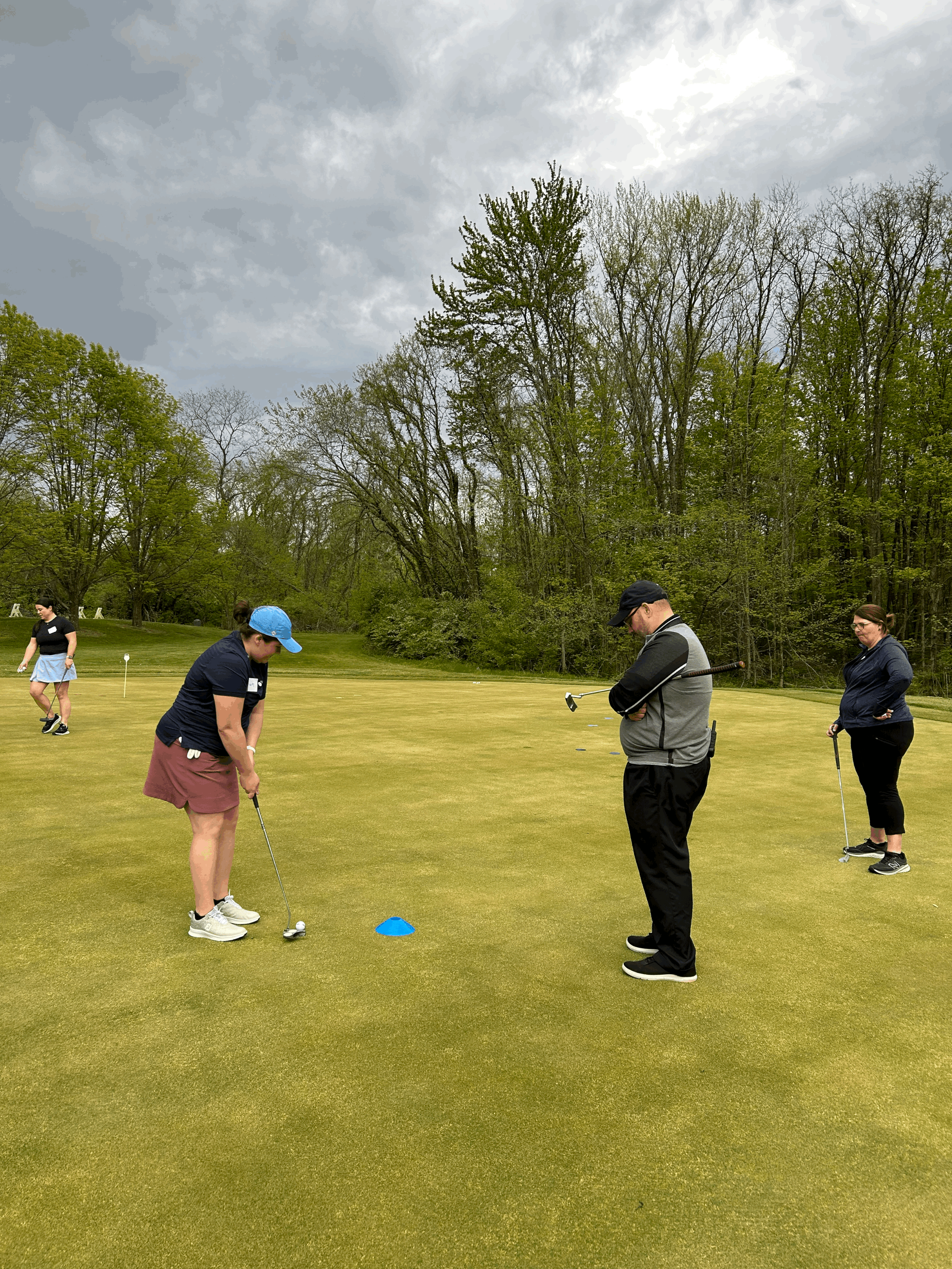
What Exactly IS a Golf Clinic?
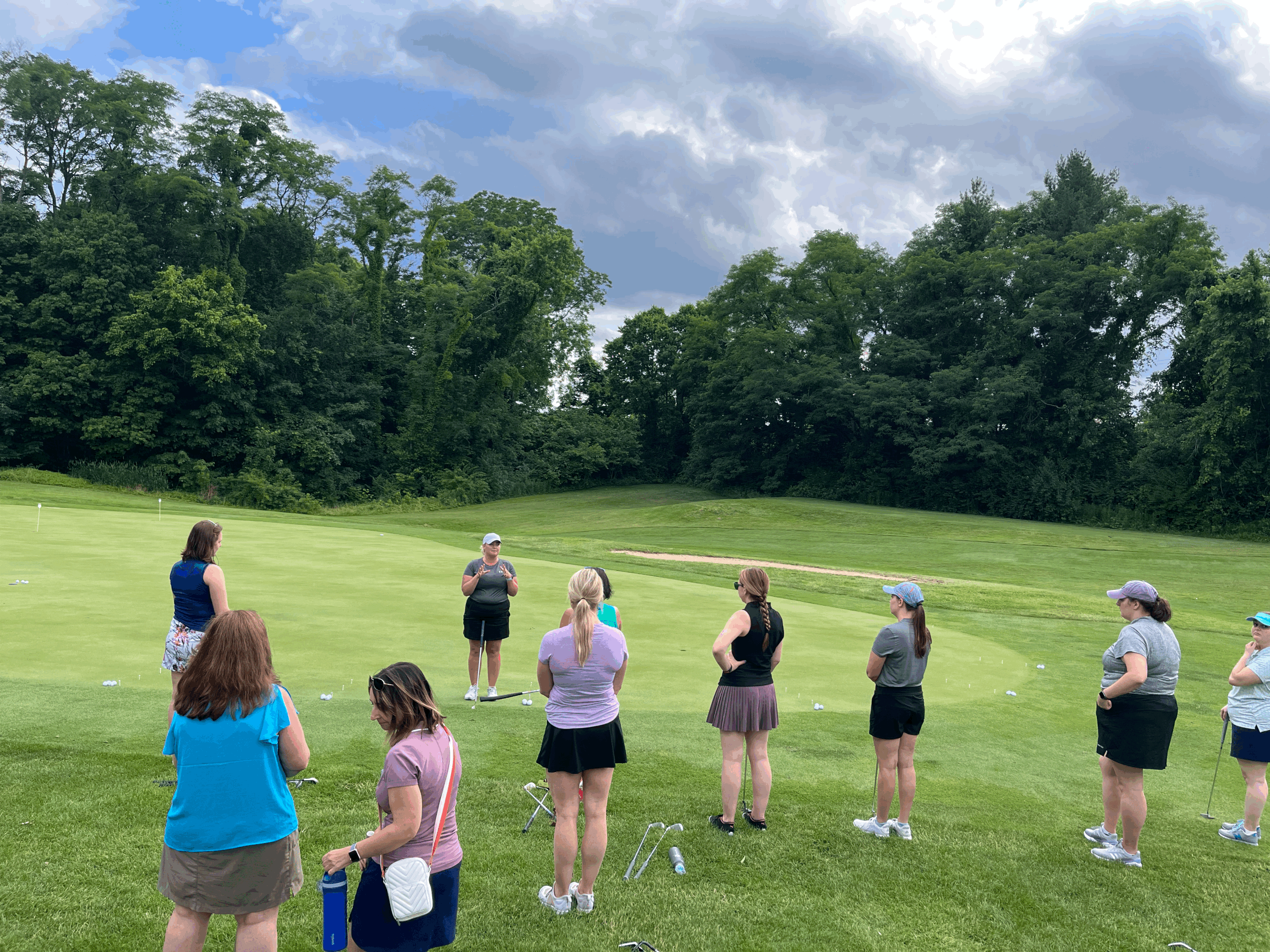
A golf clinic is basically group golf instruction - anywhere from 4-15 people learning together with one or two instructors leading the session.
Think of it like the group fitness classes you might take at the gym, except instead of spin bikes or yoga mats, you're learning golf skills.
Most clinics are structured around specific topics or skills:
Beginner series: Usually 3-6 weeks covering all the basics
Skills-specific clinics: Focused on one thing (putting clinic, driver clinic, short game clinic)
Level-based: Beginner, intermediate, or advanced
Women-focused: Designed specifically for female golfers
Themed workshops: "Get Ready for Golf Season" or "Course Confidence for Business Golf"
The typical clinic format runs 60-90 minutes, once per week for several weeks. Some are drop-in single sessions, but most are multi-week programs where you register for the whole series.
My First Clinic: What Actually Happens
Let me walk you through what my first golf clinic looked like, because this will give you a realistic picture of what to expect.
In 2021, I convinced my neighbor Amanda to sign up for a four-part beginner clinic series with me at Little Miami Golf Center in Newtown, Ohio. Neither of us really knew what we were getting into, which was probably a good thing because we had zero expectations to disappoint.
Each clinic was one hour long and focused on a different aspect of the game:
Week 1: Driver
Week 2: Chipping
Week 3: Putting
Week 4: Irons
There were about 10-15 people in our group, and we met at the driving range for the first session. Here's exactly how those 60 minutes broke down:
First 10 minutes: Introduction and demonstration The instructor introduced the golf club we'd be focusing on that day - let's say it was the driver. He showed us how to position our body relative to the ball, explained proper grip, and demonstrated what the swing should look and feel like.
This wasn't death-by-lecture. It was quick, visual, and focused on the essentials we needed to actually start hitting balls.
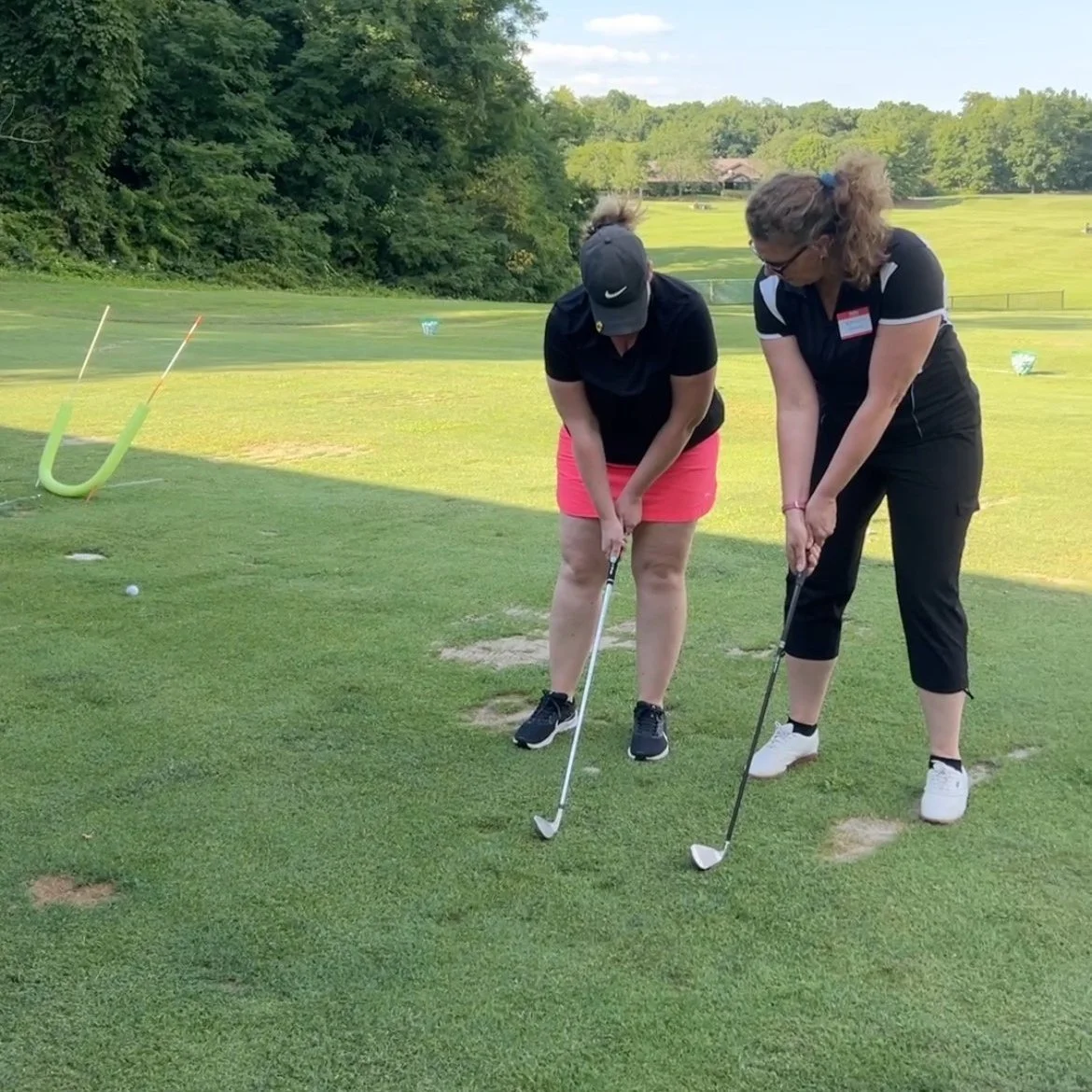
Next 30 minutes: Individual practice with rotation This was the magic. We all spread out at the driving range with buckets of balls, and the instructor rotated between us, spending 3-5 minutes giving individualized feedback to each person.
Think about that: we paid for a group clinic, but we still got personalized attention on what WE specifically needed to work on. It wasn't quite a private lesson, but it wasn't one-size-fits-all instruction either.
Meanwhile, while the instructor was working with other people, I could practice and experiment with what I'd just learned. No pressure, no one watching me except Amanda who was struggling with the exact same things.
Final 20 minutes: Group review and Q&A The instructor brought us back together, reinforced the key concepts from the session, and addressed common mistakes he'd observed while working with us individually.
This part was so valuable because I'd hear him explain something to the whole group and think "Oh THAT'S what he meant when he told me to do that thing!" The group reinforcement made things click in a way that solo practice never could have.

The Real Reason Clinics Work (Especially for Women)
The technical instruction in a clinic is great. But honestly? That's not the most valuable thing you get.
What makes clinics so powerful, especially for beginner women, is the psychological support of learning alongside other people who are at your exact same level.
You realize you're not uniquely terrible at golf.
When you see another woman top the ball off the tee, and then you top your ball off the tee, and then ANOTHER woman tops her ball, you all laugh together and you realize: this is just part of learning. You're not worse than everyone else. You're exactly where you should be.
You see that questions you're too embarrassed to ask are actually normal.
Someone else asks "Wait, am I gripping the golf club correctly?" or "How do I know which tee box to use?" and you think "Thank GOD someone asked that because I had no idea either."
You build friendships with other golfers.
Amanda and I took that clinic together, but we also connected with several other women in the group. A few of them I still see at local golf events. That sense of community is priceless when you're starting something new.
You get accountability.
When you've signed up for a four-week series and there are people expecting you to show up, you actually show up. With private lessons, it's easier to keep rescheduling when life gets busy.
What to Look for in a Quality Golf Clinic
Not all golf clinics are created equal. Here's what separates the good ones from the disappointing ones:
Small group sizes (10-15 people max)
If there are 30 people in a clinic, you're not getting enough individual attention unless there are multiple instructors divvying the group up. The sweet spot is 8-12 participants with one instructor, or 15-20 with at least two instructors working together.
Ask when you register: "How many people typically sign up for this clinic?"
Progressive structure that builds skills
Some beginner clinic series I've seen follow this type of progression:
Week 1: Wedges and short game - Learn the shots that actually save strokes
Week 2: Driver - The most exciting club (everyone wants to hit the big stick)
Week 3: Irons - Build on what you learned with the driver, but with more precision
Week 4: Putting - End with the most important part of scoring
The topics may flow in this order or slightly different, but across the weeks of the clinic series the instructor should touch on each one of these topics.
Actual practice time, not just watching
Some clinics are mostly demonstration with minimal time for participants to actually hit balls. That's a seminar, not a clinic.
You want at least 50% of the time to be hands-on practice with your own clubs. If the clinic description doesn't mention practice time or range balls included, ask specifically.
Qualified instructors who can teach, not just play
Being good at golf doesn't automatically make someone a good teacher. Look for:
PGA or LPGA certified teaching professionals
Positive reviews from past clinic participants
Experience specifically with beginner adult learners
Equipment appropriate for skill level
Beginning clinics should provide clubs if you don't have your own, or at minimum have demo clubs available to try. You shouldn't need to invest in a full set of clubs before attending a beginner clinic.
Clear learning objectives for each session
A clinic that promises to "make you better at golf" is too vague. You want specific outcomes:
"Learn proper grip and setup for driver success"
"Develop a consistent putting routine"
"Master three shots from around the green"
The Different Types of Clinics (And Which One You Need)
Beginner Foundation Series (4-6 weeks)
Best for: Complete beginners who've never had instruction
Cost: Usually $150-300 for the series
Focus: All basics - clubs, terminology, fundamental swing mechanics
Time commitment: 1-1.5 hours per week for 4-6 weeks
This is where I started and where I recommend most beginners start, if you’re not ready for private lessons. You get exposure to every aspect of the game without overwhelming detail.
Skills-Specific Clinics (1-3 sessions)
Best for: Golfers who need focused help on one part of their game
Cost: Usually $40-100 per session
Focus: Deep dive on putting, driver, short game, bunker play, etc.
Time commitment: 1-2 hours per session
These are great once you've been playing for a bit and you know what your biggest struggle is. "I need help getting out of bunkers" or "My putting is holding me back" - there's probably a clinic for that.
Women-Focused Clinics
Best for: Women who want to learn among their peers in a comfortable, supportive environment
Cost: Similar to mixed clinics ($150-300 for series)
Focus: Same content as regular clinics, but women-focused groups
Time commitment: Varies by program
The content is usually the same as co-ed clinics, but some women strongly prefer the dynamic of all-female learning environments. If that sounds appealing to you, specifically ask golf courses if they offer women-focused options.
Get Ready for Season Clinics
Best for: Golfers who played last year and want a refresher before season starts
Cost: Usually $75-150 for a condensed series
Focus: Tune-up your skills, shake off the rust
Time commitment: Usually 2-3 sessions
These pop up in late winter/early spring and they're perfect for knocking the rust off before your first rounds of the season.
How Clinics Compare to Private Lessons
"Okay Mary, but should I do clinics OR private lessons?"
Great question. Here's my honest breakdown:
Choose clinics when:
You're a complete beginner and need foundational knowledge
Budget is a primary concern ($150-300 for clinic series vs. $400+ for 4 private lessons)
You want to meet other golfers and build community
You learn better in social environments
You want exposure to multiple areas before focusing on anything specific
The idea of one-on-one instruction feels intimidating
Choose private lessons when:
You have specific issues that need personalized attention
You've done clinics and are ready for customized feedback
Your learning style requires individual focus
You have unusual scheduling needs (private lessons are more flexible)
You want faster progression on specific skills
Budget isn't your primary constraint
The hybrid approach (my recommendation): Start with a clinic series to build your foundation and meet other golfers. Then add in private lessons for areas where you're really struggling or want to accelerate improvement.
This gives you the best of both worlds - affordable community learning plus targeted individual instruction when you need it.
Finding Clinics Near You (Your Action Plan)
Don't let this information just sit here. Here's how to actually find and sign up for a clinic this month:
Step 1: Check your local municipal golf courses These often have the most affordable clinics and they're specifically designed for community members, not country club members. Call the pro shop or check their website under "instruction" or "golf school."
Step 2: Search your Parks & Recreation department Many city rec departments offer golf instruction programs, often at below-market rates. Check your city's website or call the main rec office.
Step 3: Visit PGA.com's "Find a Coach" feature Filter by group instruction and your location. This will show you certified professionals who offer clinics in your area.
Step 4: Ask in local women's golf Facebook groups Search for "[Your City] women's golf" and join those groups. Post asking for clinic recommendations. You'll get real reviews from real people.
Step 5: Sign up for spring clinic sessions NOW Most spring clinics fill up by Mary/April. If you want a spot in a good program, register this month even if the clinic doesn't start until June.
What to Bring to Your First Clinic
You've signed up for a clinic - amazing! Here's what you need:
Essential:
Golf glove (if you have one)
Comfortable athletic clothes
Golf shoes or athletic shoes with good tread
Water bottle
Sunscreen
Hat or visor
Clubs (or confirm the clinic provides demo clubs)
Optional but helpful:
Small notebook for notes
Phone to record video (if instructor says it's okay)
Advil (you'll be using muscles you don't normally use)
Not necessary:
Expensive equipment
Perfect golf attire
The Amanda Update (And Why It Matters)
Remember how I mentioned that my neighbor Amanda came with me to that first clinic series purely to support me, even though she had zero desire to play golf?
Here's the beautiful thing: Amanda completed all four weeks, learned alongside me, encouraged me, and then graciously bowed out afterward. She was honest: "I learned a lot, but I'm more of a tennis person."
And that was perfectly okay.
She gave me exactly what I needed - companionship during those vulnerable first steps, someone to laugh with when we both topped the ball, someone to celebrate with when we made good contact.
I tell you this because sometimes you need a clinic buddy to get started. If you have a friend who's golf-curious, invite them. If they turn out to love it, great! If not, you still got the support you needed to take the first step.
And then you'll find your actual golf people in the clinic itself.
Your Mission
Spring golf clinic registration is happening RIGHT NOW for programs starting running through the golf season.
If you've been thinking about taking golf instruction but haven't pulled the trigger, this is your sign.
Find one clinic - just one - that fits your schedule and budget. Sign up before it sells out.
Because here's what I know: the women who make real progress in golf aren't the ones who keep thinking about taking lessons. They're the ones who actually show up to clinics, ask questions even when they feel dumb, practice what they learn, and give themselves permission to be beginners.
You can be that woman. You just have to register.
Ready to get prepared for your first clinic? Download my free Driving Range Guide to learn exactly how to practice effectively between clinic sessions. It includes my proven practice routine that you can complete in just one hour at the range.